Farmers in Cikarawang Village, Bogor Regency, Rise Through Green Product Innovation
Thursday, 25 September 2025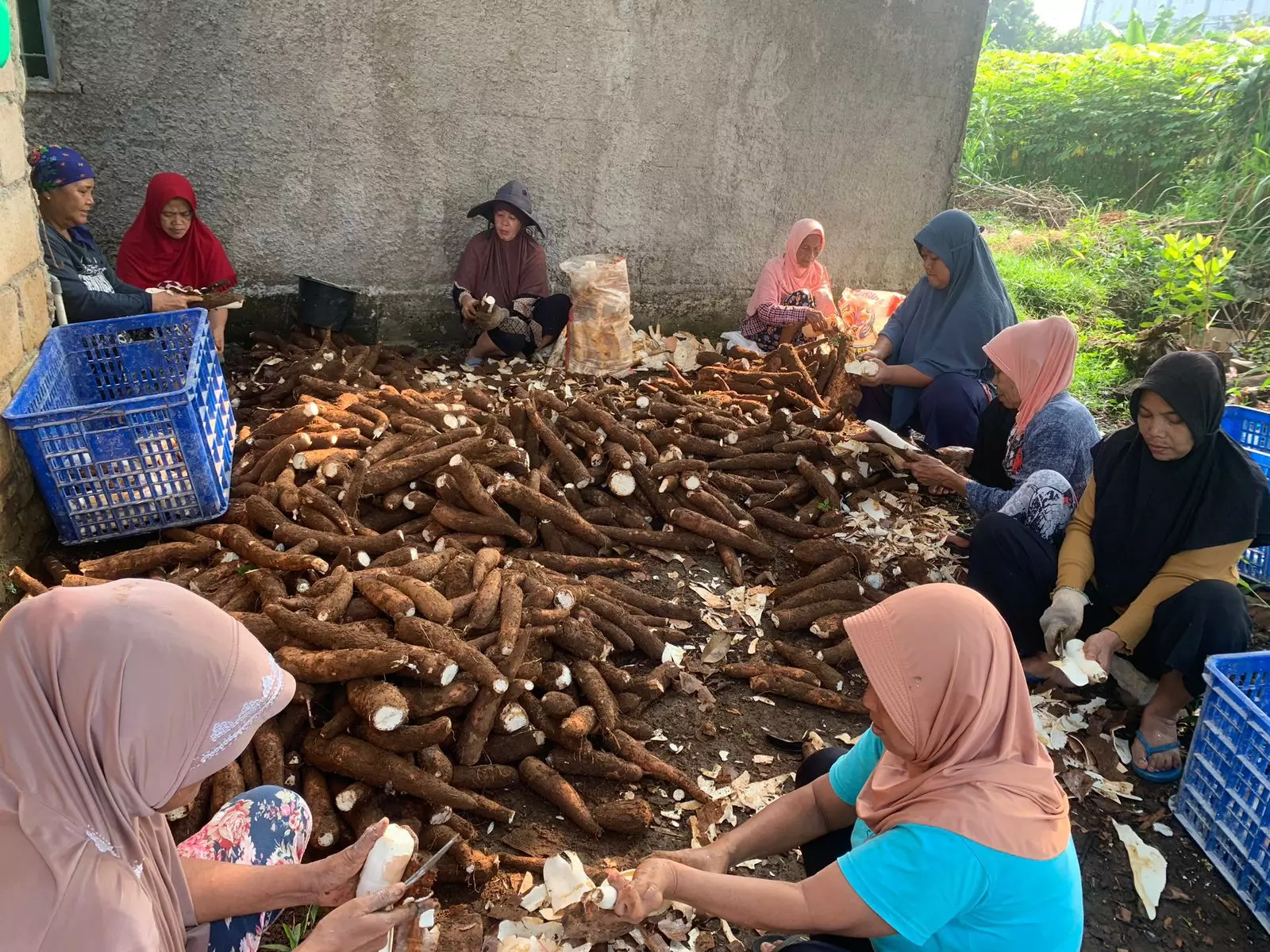
The PKM RSH Ecoplas Team from IPB University had the opportunity to conduct research with the Setia Farmers Group in Cikarawang Village, Bogor, West Java. Previously, cassava farmers in Cikarawang Village sold their harvested cassava to middlemen or local markets at uncertain and often very low prices. Every harvest season, months of hard work frequently ended in disappointment because the selling price of cassava did not match the effort invested. Farmers had few alternatives, as selling to middlemen was considered the fastest way to earn income.
Thanks to collaboration with Greenhope, a pioneer in environmentally friendly plastics, the Setia Farmers Group underwent a transformation that was not only about products, but also about changing mindsets and improving the welfare of cassava farmers in Cikarawang Village. Interestingly, the farmers were introduced to the concept of cassava product diversification through training programs conducted by Greenhope.
The Setia Farmers Group, which previously sold raw cassava to middlemen, is now supported in processing cassava into tapioca flour. This tapioca flour is used by Greenhope as a raw material for Ecoplas, an environmentally friendly plastic that can naturally decompose.
This transformation not only increased the selling value of cassava but also created new employment opportunities. Many villagers became involved in the processing activities as daily workers. As a result, the benefits of cassava are now felt more broadly not only by farmers who own land, but also by surrounding communities who gain additional income.
The collaboration with Greenhope did not stop at tapioca flour production. Through intensive training, farmers were encouraged to develop other derivative products. One of the innovations developed by the Setia Farmers Group with Greenhope’s support is mocaf flour (modified cassava flour), which is gluten-free. This flour is processed into mocaf noodles under the brand name “Simeko.” Interestingly, these mocaf noodles have already been marketed through online marketplaces, opening wider sales opportunities.
“Not only in processing tapioca flour for Ecoplas materials, we have also received a lot of training in making other processed food products. This has been very useful and popular among the women here,” said Mr. Murnan, one of the Setia Farmers Group members who actively participates in the training.
The training programs also included the production of processed food products such as cassava roll cakes, kembang goyang, and various traditional snacks with significantly higher market value. These innovations have increased farmers’ confidence and enabled them to compete with more modern food products.
Today, cassava harvests are no longer trapped in the low-price system imposed by middlemen. Their value has increased after being processed into value-added products. Farmers’ welfare has also improved due to additional income and new job opportunities for local residents. More importantly, farmers no longer see cassava as a second-class crop, but rather as a gateway toward a sustainable green economy.
The collaboration between the Setia Farmers Group and Greenhope proves that agriculture can become an important part of the Green Economy. Through cassava product diversification, farmers not only support food production but also contribute to reducing dependence on single-use plastics through Ecoplas. Greenhope has demonstrated that collaboration with farmer groups can create major changes: villages can become drivers of green innovation as well as spaces where sustainability solutions are born.
Today, cassava is no longer just a food crop. It has become a symbol of hope and sustainability a real step toward a greener future that begins in the village.
Source article: https://jurnalpost.com/petani-desa-cikarawang-kabupaten-bogor-bangkit-dengan-inovasi-produk-hijau/86103/
Latest Post